



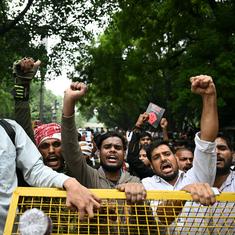



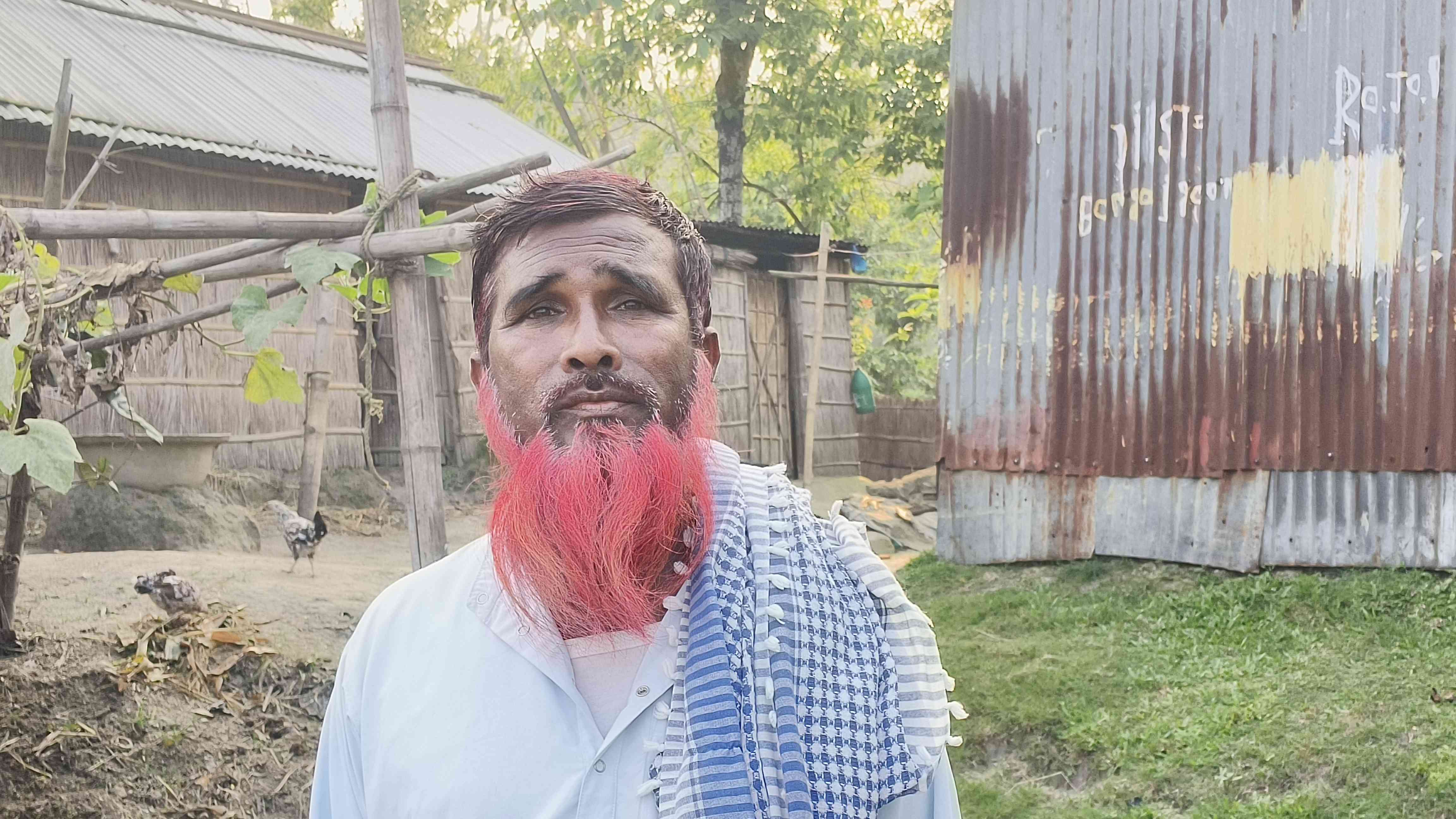
“For people like us, the last five years have been very difficult,” said Shahjamal.
The 55-year-old lives in a village on the banks of the Brahmaputra in Assam’s Bongaigaon district. He said he is worried about what will claim his home first – the Brahmaputra, which flows 50 metres away, or the bulldozer of the Bharatiya Janata Party government.
In the last five years of BJP rule in Assam, the community of Bengali-origin Muslims, also called Miya Muslims and often reviled as Bangladeshis and “illegal immigrants”, has faced enormous hardship.
Thousands of their homes, allegedly built on public land, have been razed by the Himanta Biswa Sarma government. Hundreds of people from the community were forced out into Bangladesh, in the dead of the night and sometimes at gunpoint – bypassing the legal process of deportation.
Shahjamal’s family in Tinkonia village dealt with both challenges.
In October 2024, Shahjamal’s brother’s home was torn down in a demolition drive, as it had been built on government land. Most of the village, home largely to Muslims of Bengali origin, has been submerged over the years. “There is no land for building permanent homes, no land for cultivation,” Shahjamal said. “We are just surviving.”
Worse followed in May last year, when his brother, Sahar Ali, was sent to the Matia detention camp in Goalpara district – and “pushed” into Bangladesh six months later. The family last spotted him in a Facebook video from Bangladesh. “We don’t want anything,” Shahjamal said. “Just have mercy on us and bring him back.”
Ali is a declared foreigner – typically long-term residents with families and properties in Assam, who have failed to prove that they are Indian citizens before the state’s foreigners tribunals.
“Before the BJP came to power, we did not live in such fear,” Shahjamal said. “The BJP government has turned us into foreigners, demolished our homes, punished us by removing us from voter lists.”
The community has found no sympathy from Chief Minister Himanta Biswa Sarma, who has in the past accused them of carrying out “land jihad” to capture land from indigenous Assamese and “fertiliser jihad”, selling crops laced with excessive fertiliser and insecticide.
In 2021, Sarma repeatedly said the BJP did not need the votes of the community . This time, the party has not fielded a single Muslim candidate.
“My job is to make the Miya people suffer,” Sarma said on January 27, amid attempts by the BJP to file bulk objections against Bengal-origin Muslim voters.
Sarma promises to continue his aggressive targeting of the community if voted in again. “Last time, some legs were broken. This time, we will break their backbone,” the chief minister said in Barpeta on March 26, while campaigning for the coming Assembly election. The BJP’s election manifesto, too, has promised more demolitions and “pushbacks”.
Five years of Himanta
As Scroll travelled across the districts of Barpeta, Bongaigaon, Dhubir and Goalpara in Lower Assam, Muslims of Bengali origin spoke about their apprehensions of another five years of BJP rule. But, significantly, they said they had no great expectations that the Opposition parties would come to their aid.
Asif Hussain, a 24-year-old pharmacy student from Barpeta, said the community was constantly “dehumanised” in the last five years. “Almost every law they brought in was anti-Muslim in nature or left out Muslims, making us feel alienated. As Miya Muslims, we have seen the worst.”
Nafisa Younis, a college teacher in Barpeta district, described the past five years as “deeply traumatic”. “The process of ‘otherisation’ has become institutionalised,” she said.
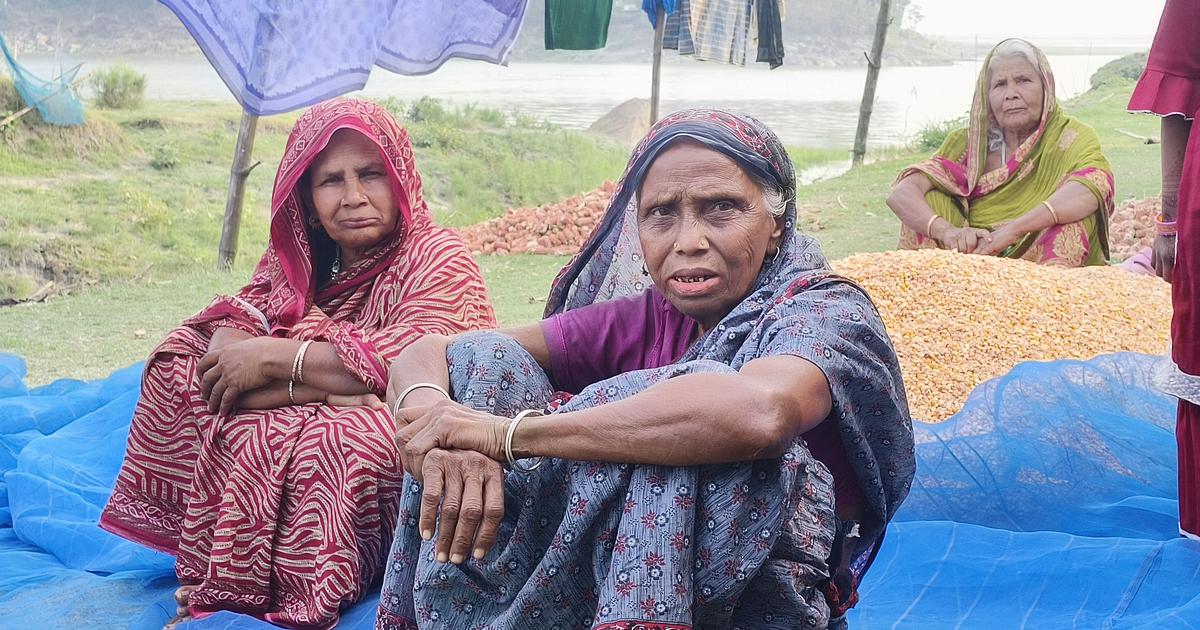
In Tinkonia village, Shahjamal’s 70-year-old neighbour Rup Bhanu, whose son’s home was demolished in 2024, said she cannot sleep at night in fear of being displaced. Bhanu, like others in the near-submerged village, lives on strips of government land on the banks of the Brahmaputra. “If Himanta comes back, the atrocities will continue,” she said.
Let down by the Congress
The Muslim community, which accounts for 34 per cent of the state’s population according to the 2011 Census, will play a decisive role in 23 of the 126 Assembly seats that go to the poll in Assam. That number was 30 before the delimitation exercise in 2023 redrew the state’s electoral map, to contain the electoral influence of the community, as BJP leaders have said on record.
For decades, the community voted overwhelmingly for the Congress party, till the emergence of the All India United Democratic Front in 2005.
In the 2021 elections, the Congress and the All India United Democratic Front came together as part of a larger alliance against the BJP. Together, they sent 31 Muslim MLAs – 16 from the Congress and 15 from the AIUDF – to the assembly, one of the highest numbers of Muslims elected since 1983. This year, however, the Congress has refused to ally with the party, accusing it of working as the BJP’s B-team.
If the ruling party has been hostile to Bengali-origin Muslims, the Opposition has not given the community much reason for confidence.
Shahjamal, for instance, pointed out that his father and grandfather had loyally voted for the Congress in the past. “But no Congress leaders have visited our village. They hardly talk about poor Muslims like us,” he said.
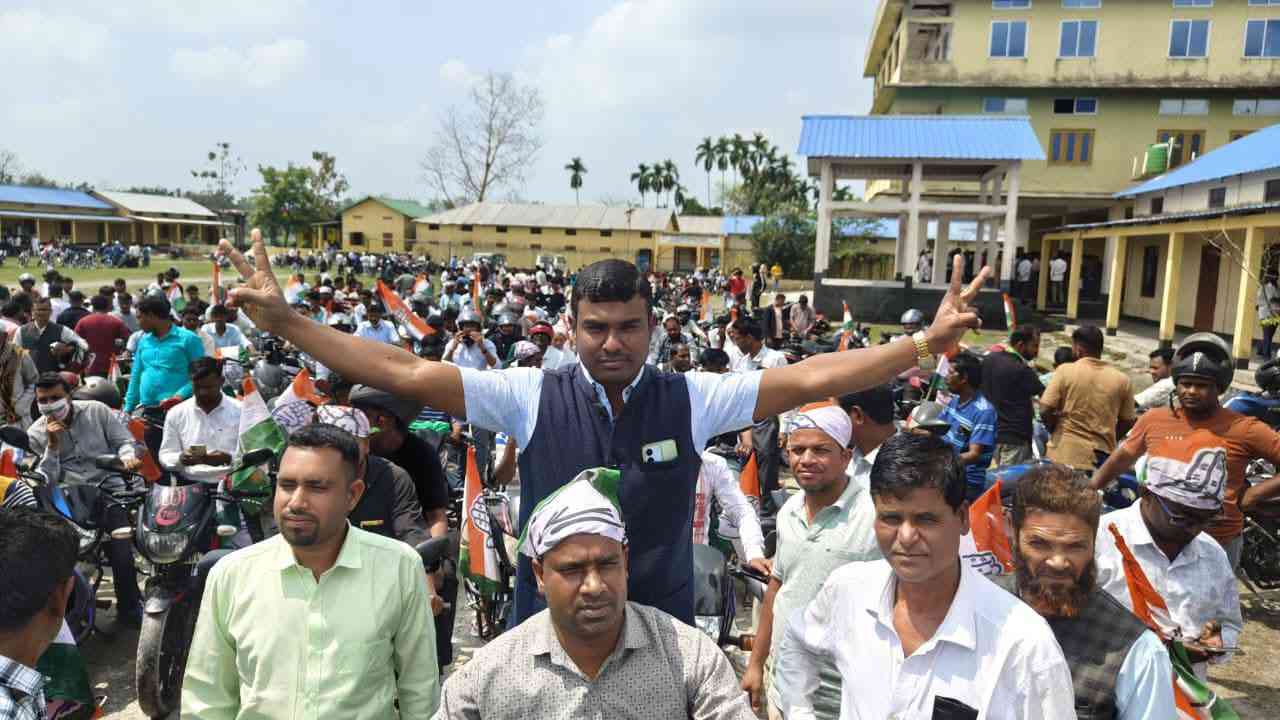
Hussain, the Barpeta student, pointed out that of the 29 Congress legislators who won the last Assembly election, over half – 16 – were from the Muslim community. “But still they chose silence when Muslims were harassed or evicted because they think of us as their captive voter base,” Hussain, a voter of Pakabetbari assembly seat, said.
The party’s silence on the contentious issue of evictions and the illegal expulsions of Bengal-origin Muslims into the no man’s land abutting Bangladesh has left the community feeling betrayed.
A Khan, a 30-year-old government doctor and a voter of Pakabetbari constituency in Barpeta district, said: “Even top Congress leaders are afraid of talking about our rights because they think this might reduce their votes in Upper Assam.”
Upper Assam is home to ethnic Assamese communities and tribes, and forms the heartland of Assamese nationalism.
He pointed out that “there was a huge difference between [Leader of Opposition] Rahul Gandhi and Gaurav Gogoi”. “Rahul Gandhi does not care about electoral consequences, and can criticise the RSS. Gaurav Gogoi is afraid to speak up.”
The anger against the party was evident in Goalpara last year, when Rakibul Hussain, one of the tallest leaders of the Bengali-origin Muslim community, was chased away by the displaced as they blamed him and other Congress MLAs of not doing enough to stop the evictions.
In contrast, the AIUDF has fared better in public perception. “There is an improvement in our image and strength in the last one year as AIUDF fought against the BJP’s eviction politics,” a party spokesperson told Scroll. “We have also raised the issue of pushbacks and evictions both inside and outside the assembly.”
A Congress spokesperson, who declined to be identified, admitted that the party was better placed even a year ago.
“In 2024 polls, Muslims rejected AIUDF,” he said.
The party, led by Badruddin Ajmal, was wiped out in the 2024 Lok Sabha election, and its vote share in Barak Valley and Lower Assam reduced as minorities shifted towards the Congress-led INDIA alliance in both the regions.
The Congress spokesperson added: “This time, the Congress could have easily won 19 or 20 seats out of the 22 seats where Muslim voters are decisive. But now that seems difficult. The renewed hope in the party seems to have been shattered.”
Despite that, he claimed that the party will win the majority of the 22 seats.
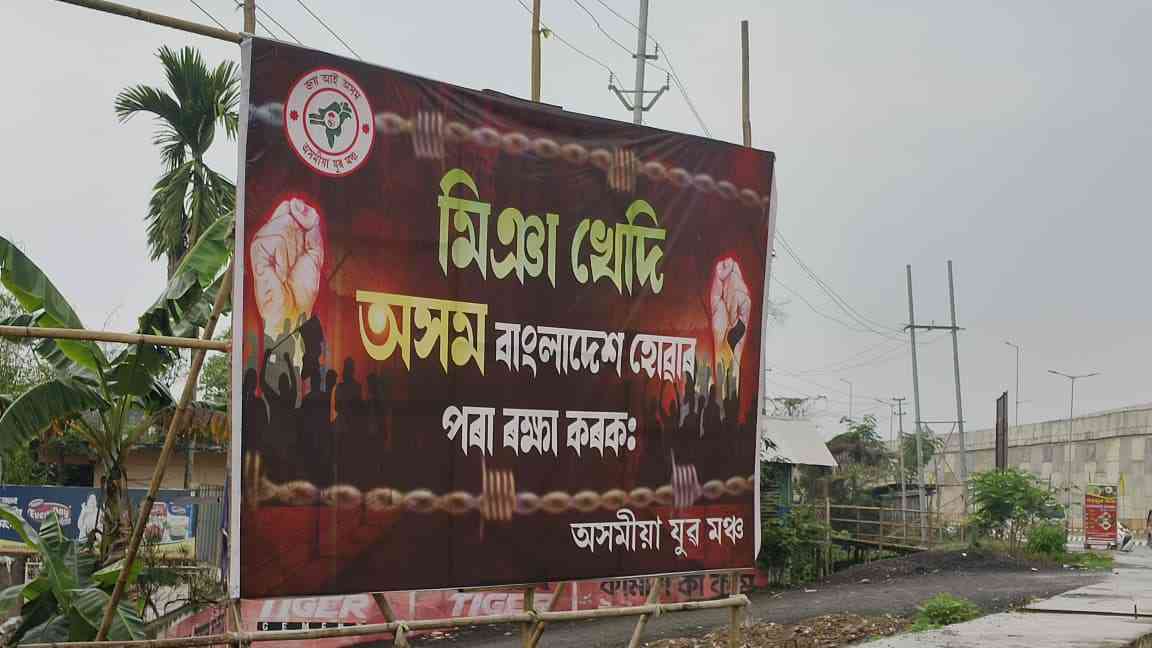
The AIUDF’s slide
Take Shahjamal’s Srijangram constituency in Lower Assam’s Bongaigaon district, where over 90% voters are Muslim and which is a Congress stronghold.
The AIUDF has fielded Rezaul Karim Sarkar, the former president of All Assam Minorities Students' Union, and a popular leader who has taken a firm stand against evictions and citizenship trials. Sarkar had joined the Congress in January, but had to quit in two days after a statement he made was sharply criticised by leaders within his party.
The Congress has fielded a local businessman against him.
Shahjamal said that Sarkar, unlike Congress leaders, visited his village and his fellow residents would probably vote for him.
His neighbor Gulbar Ali, a 42 year-old fisherman, said most of the displaced people in the village will vote for Sarkar. “We know nobody will work for us. But at least Rezaul will talk about our issues.”
But Monowar Hussain, a journalist from Lower Assam, said that AIUDF’s popularity is on the wane in the region, though it has been more vocal in speaking up against the evictions against Muslims. “Many believe the AIUDF helps BJP and that there is a tacit understanding between Ajmal and Himanta.”
Scroll’s conversations with voters, too, suggest that they are unwilling to ditch the Congress party, despite their disillusionment.
S Mahammad, a 30-year-old voter of Mandia in Barpeta district, agreed that the Congress’s silence on the community’s hardship was unfortunate. “I don’t like Assam Congress but I am compelled to choose it because of the circumstances,” Mahammad, a Kalgachia-based trader, said. “We can’t vote for AIUDF as its rise gives the BJP an advantage.”
He said he would vote for the Congress due to its anti-BJP alliance with the Left and the new regional party Raijor Dal and Asam Jatiya parishad. “Even if the alliance can’t form a government, we at least need a strong Opposition,” Mahammad said.
Other voters explained the Congress’s silence on contentious issues as pragmatism.
“The Congress works for us, but silently," said Eunus Ali, a resident of Uriamghat, on the Assam-Nagaland border, where 2,200 homes were demolished last year. “They don’t publicise or express their work for Muslims openly because of Himanta, who calls the Congress a Miya party.”
Political scientist Parvin Sultana told Scroll that the shift of Muslim votes back to Congress started in 2016 and continued till 2024.
“A revival of AIUDF will be a big challenge as the party has been left out of the opposition alliance,” Sultana, who teaches political science at a college in Dhubri district, said. “But at the same time, the party will not be completely decimated.”
‘Elections seem almost hopeless’
Several voters told Scroll that they have begun to question the point of elections.
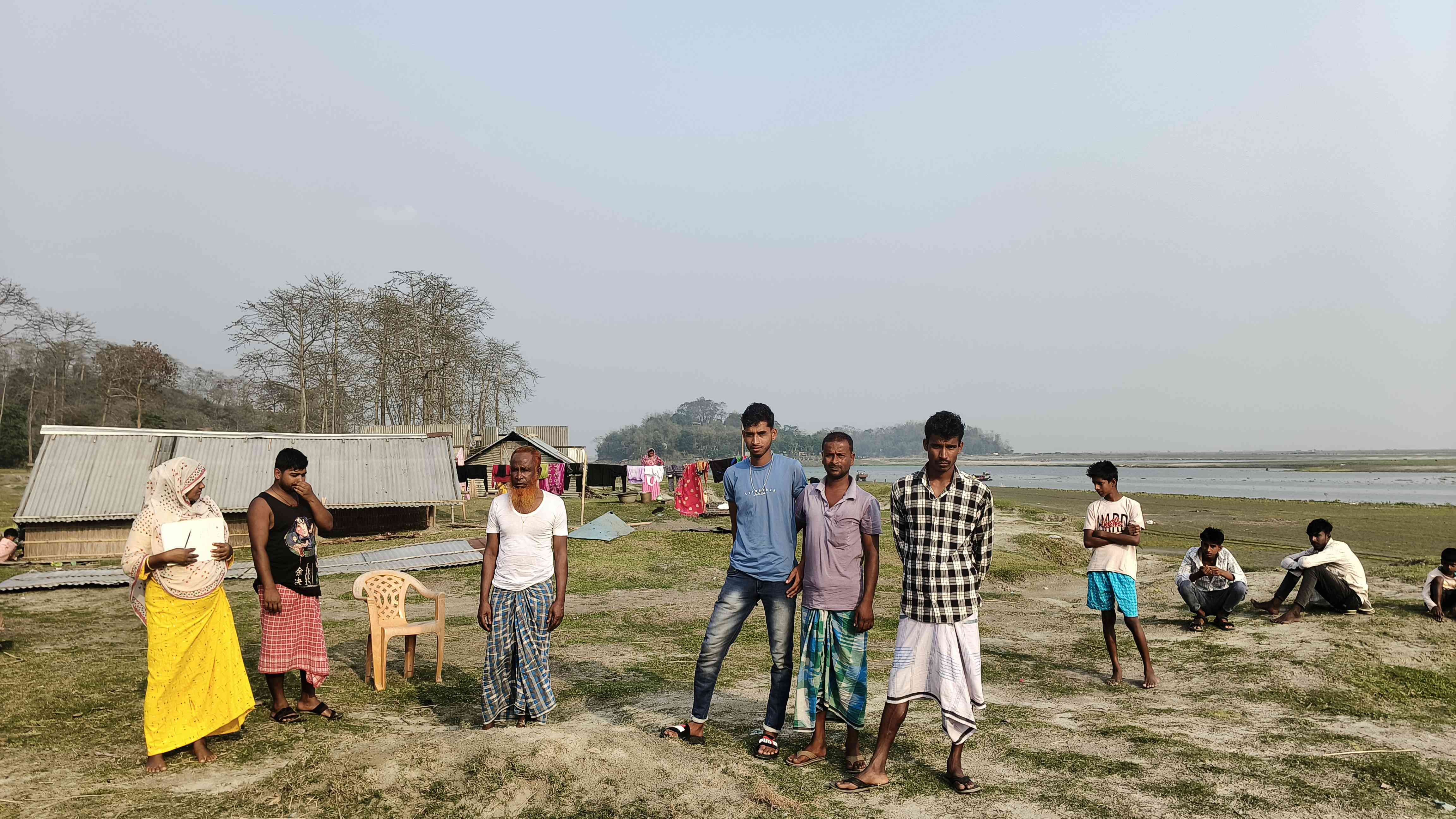
“We will vote for someone who can give us shelter and talk about our issues,” said Mumtaz Begum, a 38-year-old woman from Bongaigaon district, whose home was demolished in December.
She and a hundred-odd displaced families now live on the edge of the river in Mohonpur village, without drinking water facilities and toilets. “But it is unlikely that our lives will change. The elections seem almost hopeless for us.”
“We feel very helpless,” said Bulbul Azad, a 26-year-old schoolteacher from Uriamghat. “There are 31 Muslim MLAs, but they have done little for the eviction-hit people.”
Like them, Shahjamal has few hopes pinned on the Assembly election. “We don’t know whether our lives will change if we vote,” he said.
He added: “Muslims don’t have a say in government formation. It is up to the Hindu community. We can only pray and appeal to them to elect someone who can bring peace to our lives.”
All photographs by Rokibuz Zaman.
